Welcome to the International Wader Study Group
The International Wader Study Group is an
organisation of enthusiastic professionals and amateurs researching waders, also called shorebirds. The involvement of the members of the
IWSG in wader research ranges from observing waders in ones own ‘backyard’ to extensive, long-term studies aiming at a deeper
understanding of spectacular wader phenomena like long-distance migration, living in extreme environments and variable reproductive strategies.
Read more about us here...
Welcome to Wilhelmshaven
The 2013 Annual Conferences of the IWSG will be held as back-to-back conference with the
Waterbird Society in the last week of September 2013 in Wilhelmshaven, Germany.
REGISTRATION IS NOW OPEN!
Click here to go on directly to the registration pages.
Please visit the conference webpages for more information on
accommodation, excursions and workshops.
The final conference programm will go online in August.
Looking forward to seeing you all in Wilhelmshaven at this exciting and truly global event.
Monitoring sanderling breeding success in 2012
Dear sanderling observers,
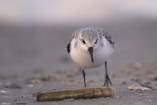
In late summer 2012 we asked for your help by reporting the number of juveniles within sanderling flocks.
Here we provide a first overview of the results that we achieved together. You can find these in this poster.
Note, that this is just a preliminary report of the first main results. For now, we have now only used observations from mid October – mid November, when sanderlings have most
certainly settled in their wintering quarters.
Your scores of juvenile percentages from before that period are still very valuable, because
1 juvenile percentages during the migration period could even better reflect reproductive success,
2 we need to ascertain whether mid October –mid November is indeed the optimal period to conduct such a survey and
3 we are interested in behavioural differences between adults and juveniles.
We want to thank all of you for your help and hope that we may count on your observations again this year!
If you are interested to help out, download this manual or get in touch with the project leader Jeroen Reneerkens
for a manual in Dutch, German, French or Spanish.
With kind regards, Hilger Lemke & Jeroen Reneerkens
Are these spoon-billed sandpipers
on an estuary near you?
Nine spoon-billed sandpipers were artificially reared on the breeding grounds this summer and were released as juveniles. All migrated in mig-August
and we hope that they will be seen on autumn migration or in winter. Each bird has a lime green leg flag with a single character engraved on it and
a sinlge colour ring.
The chance that one of these will be seen is low but it would be fantastic if we did find them. All records of spoon-billed sandpipers are valuable, so
please send them to Christoph Zöckler
There are still gaps in our knowledge of the migration routes and wintering areas, but with your help we will fill them.
Assistance asked to determine sanderlings' breeding success
In August-September 2012 many observers have reported exceptionally high numbers of juvenile sanderlings (and other Arctic waders).
To document whether the breeding season indeed has been exceptional for the species, we ask for your help. A proper description of sanderling's
breeding success is only possible when performed on a large spatial scale. With your help we can perform an outstanding unprecedented job.
If you are interested to help out, download this manual or get in touch with the project leader Jeroen Reneerkens
for a manual in Dutch, German, French or Spanish.
We will put up more information soon.
More background information can be found in a recent contribution in the Wader Study Group Bulletin
(Wader Study Group Bull. 119(2): 129–132).
The IWSG won the 2012 AEWA Waterbird Conservation Award!
To our flock mates around the globe - this is yours!
During the 5th session of the Meeting of the Parties to AEWA (African-Eurasian Waterbird Agreement) in La Rochelle, France, from 14 to 18 May 2012, the IWSG received the 2012 AEWA Waterbird Conservation Award.
General Secretary of the IWSG Gregor Scheiffarth accepting the award (Øystein Størkersen (r), AWEA Standing Committee Chair)
"We, the International Wader Study Group are extremely honoured to receive the AEWA Conservation Award. This award recognises a group of volunteers, professionals and amateurs who form a world-wide network connecting all continents and many cultures. For more than 40 years, this group has worked towards wader conservation, through collecting and synthesising information on waders and helping to protect their critical habitats.
On their biannual migrations, waders need functional wetlands to use as stepping stones, where they can collect the reserves necessary for their incredible long-distance journeys. As they travel from continent to continent, birds are unaware of human, political boundaries. However, researchers, subject to these limitations may be left holding various pieces of a larger puzzle they cannot see. Therefore, international collaboration is essential to view all of the processes connecting the life cycles of these birds. The community of the International Wader Study Group fosters these connections between people working on the same topics in different parts of the world, and many fruitful co-operations have emerged from this community.
Achievements in conservation of waterbirds have been made in some parts of the world, for example in the flyways covered by AEWA. Despite this, wetlands are disappearing worldwide at rates faster than seen in any other ecosystems. Wetlands are declining not only in number and size, but also in quality, further reducing the resources waterbirds need for their survival. A striking example of a vast decline in wetlands is the Yellow Sea area where up to 50% of the tidal mudflats have been lost in just the last 10 years. This jeopardises the persistence of a number of threatened waterbird species, including the nearly-extinct Spoon-billed Sandpiper. But even in the well-protected European Wadden Sea, which is a World Heritage Site, the population of a common wader, the Oystercatcher, is declining. Worryingly, the reasons for this decline are largely unknown.
Just the examples of the Yellow Sea and the Wadden Sea show that many efforts are still needed to halt the decline in wetlands all over the world.
The IWSG standpoint is that effective conservation can only be achieved through sound knowledge of wader ecology. In the future, we will further instigate and support high quality, global monitoring systems. We will promote that the data showing what is going on with populations is up-to-date, and accessible to everybody concerned. More importantly, we will promote fundamental ecological work that demonstrates the processes linking habitat loss or degradation with population declines. With this knowledge, actions that focus on the major issues can clearly be defined.
This award will encourage the members of the IWSG to enthusiastically continue working toward their common goal: providing waders with the environment they deserve. Thank you!"
For more details see the AEWA press release.
The International Wader Study Group is looking for volunteer News and Notes Reporters
The conservation biology of coastal-breeding plovers, Caen, Normandy, 17-18 November 2012
The Kentish Plover Charadrius alexandrinus population of the E Atlantic and W Mediterranean coasts is considered to be “isolated” according to Delany and Scot (2006) and the species has shown a slow decrease across Europe according to Birdlife International (2004). As a consequence, the Kentish Plover is listed in Appendix 1 of the European Birds Directive (79/409). In France, the species has been added to the Red List of Threatened Birds (2010) and is considered as endangered. The latest estimate of the breeding population of the Kentish Plover in France is for 1996, and amounts to 1,200-1,500 pairs (Birdlife International, 2004).
Within this framework the GONm and the DREAL of Basse-Normandie are organizing a workshop entitled "The conservation biology of coastal-breeding plovers" in Caen, on 17-18 November 2012.
For more details see the workshop announcement.
Be aware of fraud
Following the successful IWSG Conference in Strathpeffer, Scotland, in late September 2011, the Executive Committee of the International Wader Study Group have learned that some of the attendees have been approached by e-mail, being invited to publish in a journal called Journal of Life Sciences, from David Publishing.
The publisher of this journal is David Publishing, and is believed to be part of a so called "bait-and-switch" publishing fraud. Basically, it is set up to invite people to publish, flattering the author with praise, and eventually charging large sums of money for "services" provided.
The International Sociological Association have warned their members of a similar fraudulent approach to participants of their 2010 conference, as have organisers of the 4th Nordic Geographers Meeting of this year.
The International Wader Study Group is in no way connected to Journal of Life Sciences or David Publishing.
The Wader Study Group Bulletin, on the other hand, is a recognised, honest journal. Peer-reviewed, and with no hidden costs. Recently accepted into Scopus. THE WSG Bulletin is ideal publishing your wader (shorebird) related papers, reaching an audience virtually World Wide.
At this link, a feature from news website Weekly Trust, giving an account of the fraud.
Red Knot in danger
Reclamation projects in Bohai Bay threatens two subspecies of Red Knots (Calidris canutus piersmai and C. c. rogersi)! Read more about this in articles recently published in Wingspan, Emu and Bird Conservation International
Sanderling marathon
A sanderling, with a departure weight of just over 100g, has flown the 6,000km from Norway to Ghana in less than five days. The bird was photographed on 11 August 2009 in chilly, damp South Norway. On 16 August a Ghanaian biologist spotted him under the coconut palms on Esiama beach. The sanderling was recognized by the coloured rings on its legs. Biologists from the University of Groningen and the University of Ghana in Accra gave the birds coloured leg rings to learn more about how they live and their survival chances. You can read more about this story here and about the IWSG Sanderling Project here
Report of our meeting in Scotland
This year, the Highland Ringing Group (HRG) hosted the conference between 23 and 27 September 2011 in Strathpeffer, 20 km northwest of Inverness, Scotland.
Read more herePlease find here our recent
and the financial statement 2011 plus the approval by the auditors
Membership
Not yet paid your membership fee for 2012 or want to renew for 2013? You can now pay your annual subscription fee online. For more info, click here