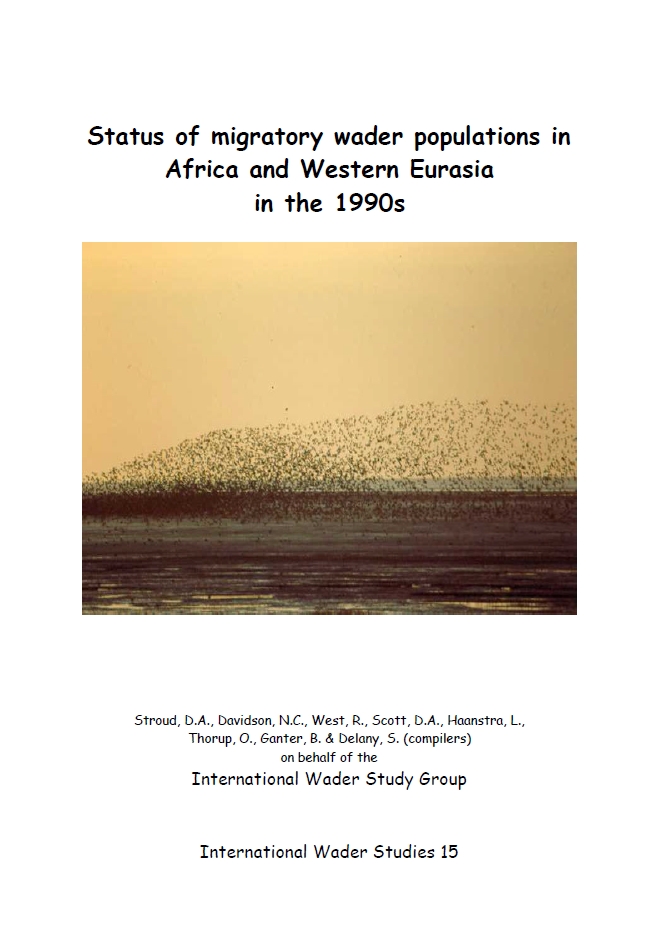
Compiled by D.A. Stroud, N.C. Davidson, R. West, D.A. Scott, L. Haanstra, O. Thorup, B. Ganter & S. Delany for the International Wader Study Group.
Online only
Other Material
David A. Stroud, Nick C. Davidson, Rodney West, Derek A. Scott, Lieuwe Haanstra, Ole Thorup, B. Ganter, Simon Delaney
Online only
Other Material
D.A. Stroud, N.C. Davidson, R, West, D.A. Scott, L. Haanstra, O. Thorup, B. Ganter, S. Delany
Online only
Other Material
David A. Stroud, Nick C. Davidson, Rodney West, Derek A. Scott, Lieuwe Haanstra, Ole Thorup, Barbara Ganter, Simon Delaney
Online only
Other Material
David A. Stroud, Nick C. Davidson, Rodney West, Derek A. Scott, Lieuwe Haanstra, Ole Thorup, Barbara Ganter, Simon Delaney
Online only
Other Material
David A. Stroud, Nick C. Davidson, Rodney West, Lieuwe Haanstra, Derek A. Scott, Ole Thorup, Barbara Ganter, Simon Delaney
Online only
Other Material
David A. Stroud, Nick C. Davidson, Rodney West, Derek A. Scott, Lieuwe Haanstra, Ole Thorup, Barbara Ganter, Simon Delaney
Online only
Other Material
David A. Stroud, Nick A. Davidson, Rodney West, Derek A. Scott, Lieuwe Haanstra, Ole Thorup, Barbara Ganter, Simon Delaney
Online only
Other Material
David A. Stroud, Nick C. Davidson, Rodney West, Derek A. Scott, Lieuwe Haanstra, Ole Thorup, Barbara Ganter, Simon Delaney
Online only
Other Material
David A. Stroud, Nick C. Davidson, Rodney West, Derek A. Scott, Lieuwe Haanstra, Ole Thorup, Barbara Ganter, Simon Delaney
Online only
Other Material
David A. Stroud, Nick C. Davidson, Rodney West, Derek A. Scott, Lieuwe Haanstra, Ole Thorup, Barbara Ganter, Simon Delaney
Online only
Other Material
David A. Stroud, Nick C. Davidson, Rodney West, Derek A. Scott, Lieuwe Haanstra, Ole Thorup, Barbara Ganter, Simon Delaney
Online only
Other Material